
Status: Ongoing, since 2024
COCONUT DEVELOPMENT PROGRAM
Coconut farming has long been an important source of livelihood for rural communities in South Minahasa. However, the sector faces several challenges, including an aging coconut population, limited rejuvenation efforts, declining interest among younger generations in agriculture, and limited access to high-quality coconut planting materials. These conditions can reduce productivity and affect the long-term sustainability of coconut-based livelihoods.
Through the Coconut Development Program, Manengkel Solidaritas supports the development of a Bido Coconut Seed Source Plantation to improve farmers’ access to high-quality planting materials and encourage the rejuvenation of coconut farms. Bido coconut is promoted for its favorable growth characteristics, including slower height growth, which can help reduce farmers’ dependence on high-risk coconut climbing labor. The program combines the establishment and management of the seed source plantation with community awareness, nursery development, cultivation training, planting, monitoring, and technical capacity building for local farmers. Farmers and community members are also encouraged to strengthen their knowledge and skills in producing, planting, and maintaining quality coconut seedlings.
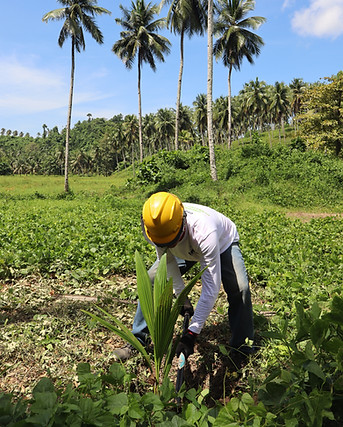

By improving access to high-quality planting materials and strengthening the knowledge, skills, and technical capacity of local farmers, the program aims to increase coconut productivity, improve the quality and consistency of agricultural production, and create stronger livelihood opportunities for coconut-farming communities. The initiative also encourages the adoption of better cultivation practices, improved farm management, and the use of productive and suitable coconut varieties that can provide greater benefits to farmers over the long term. Beyond increasing production, the program is designed to strengthen the overall resilience of coconut-farming households by helping farmers improve the value and sustainability of their agricultural activities. Greater productivity and better-quality coconut products are expected to create opportunities for increased household income, stronger local market participation, and the development of additional economic activities related to coconut processing and value-added products.
The program also contributes to the regeneration of coconut farming by supporting the establishment of reliable sources of quality planting materials that can be used by farmers for future planting and replanting. This is particularly important for replacing aging or less productive coconut trees and ensuring that coconut farming can continue to provide economic benefits for future generations.
In the long term, the initiative seeks to build a stronger and more sustainable coconut sector in South Minahasa by combining improved planting materials, farmer capacity development, better agricultural practices, and stronger community participation. Through these efforts, the program is expected to contribute to greater economic resilience among farming communities, improved agricultural productivity, sustainable land management, and the continued development of coconut farming as an important source of income and local economic growth in South Minahasa.
This project was supported by :
